How to Choose a Dog Groomer: What to Ask Before the First Appointment
13 September 2026 · 8 min read
Finding a groomer is one of those small decisions that turns out to matter a lot. A good one keeps your dog calm, catches skin problems early and sends you home with a pet that smells better and behaves the same as before. A bad one leaves you with clipper burn, a nicked ear and a dog that hides under the bed the next time you pick up the leash. The trouble is that from the outside, every salon looks about the same: a storefront, a window full of bows and a price list. This guide walks through what actually separates a careful groomer from a fast one, what to ask on the phone, what to look for on the first visit and how to read reviews without being misled by them.
Grooming is not one service. A short-haired Labrador needs a bath, a nail trim, ear cleaning and a de-shedding brush-out a few times a year. A doodle, a Shih Tzu or a Schnauzer needs a full haircut every six to eight weeks, and if the coat is allowed to mat between visits, the groomer will have to shave it short rather than style it. Before you call anyone, be honest about three things: how often you brush at home, whether your dog has ever bitten or snapped when handled, and whether there are health issues such as arthritis, seizures or skin allergies that the groomer must work around.
That information changes which salon is right for you. A busy high-volume shop that turns out thirty dogs a day is fine for a cooperative Beagle. An anxious rescue that has never been on a grooming table needs somewhere quieter, with a groomer willing to book a longer slot and go slowly. Some salons, including a number of the independent ones listed in this directory, advertise exactly that kind of one-dog-at-a-time approach.
Questions to ask on the phone
The first call tells you most of what you need to know. Ask these, in roughly this order, and pay attention to how the answers are given as much as to what they are.
How long will my dog be there? A full groom takes ninety minutes to three hours depending on size and coat. If the answer is "drop off at eight, pick up at five," the dog will spend most of the day in a crate. That is normal in many shops, but if your dog is old, anxious or not crate-trained, ask whether they offer express or by-appointment grooming where the dog is worked on straight through.
Do you use cage dryers, and are they heated? Cage dryers are a box fan pointed into a kennel. Used unheated and supervised they are harmless. Heated cage dryers left running on an unattended dog have caused deaths, and a careful groomer will explain their policy without getting defensive.
Who will handle my dog? Larger salons have bathers, who do the wash and dry, and groomers, who do the haircut. Ask whether the same person will see your dog each time. Consistency matters for nervous animals.
What happens if my dog is matted? The honest answer is "we shave it," followed by an explanation of why de-matting is painful. Anyone who promises to brush out a badly matted coat is either inexperienced or planning to hurt your dog.
Are you insured, and what is your policy if a dog is injured? Nicks and small cuts happen even in good hands. What you want to hear is that they will tell you, treat it and cover the vet bill if it needs one.
Can I see the grooming area? A shop with nothing to hide will say yes.
What to look for on the first visit
Arrive a few minutes early for the first appointment and use your eyes and nose. The floor and tables should be clean but the place should smell like wet dog and shampoo, not like bleach poured over something. Dogs waiting in kennels should have water and should not be barking non-stop in distress. Watch how the staff greet your dog: crouching, letting it sniff, talking quietly. A groomer who reaches straight for the collar and hauls the dog toward the back is telling you how the rest of the visit will go.
Look at the dogs leaving. A well-groomed dog has an even coat with no visible clipper lines, clean and dry ears, trimmed nails that do not click on the floor, and no red patches on the belly or under the legs. It should also look relaxed. A dog that shoots out the door and drags its owner to the car may simply be excited, but it may also have had a bad time.
Several groomers in northern New Mexico show what a small, owner-run salon looks like in practice. In Taos, this one lists grooming alongside boarding and daycare:
Google reviews are useful, but not in the way most people use them. The star average matters less than what the reviews describe. Look for specifics: "she took an extra half hour with my terrified rescue," "they called me when they found a lump," "same groomer for four years." Those are signs of a careful shop. Be wary of a wall of five-star reviews that all say "great job, looks cute" and nothing else, and read the one- and two-star reviews to see how the owner responds. A polite, factual reply to an unhappy customer is a better sign than no reply at all.
Pay attention to dates, too. A salon that was excellent three years ago may have changed hands. If the most recent reviews are noticeably different in tone from the older ones, ask on the phone whether the ownership or the head groomer has changed.
Grooming prices in the United States vary with the region, the size of the dog and the coat, so a Yorkie in a small town and a Bernedoodle in a big city are not comparable. As a rough national guide for 2026, a bath-and-tidy for a small dog starts around forty dollars, a full haircut for a medium dog runs seventy to one hundred and twenty, and large or heavily coated breeds can pass one hundred and fifty. De-matting, flea treatments, teeth brushing and hand-stripping are usually extra. A quote that is far below the local range usually means a very fast groom, an inexperienced groomer or hidden add-ons at pickup, so ask for the total price in advance, including any fees for matting, aggression or a dog that arrives dirty.
Tipping is customary in American grooming salons, in the same way as at a hair salon: fifteen to twenty percent, or a flat ten to twenty dollars for a straightforward groom, and more if the groomer handled a difficult dog patiently.
Specialty and mobile options
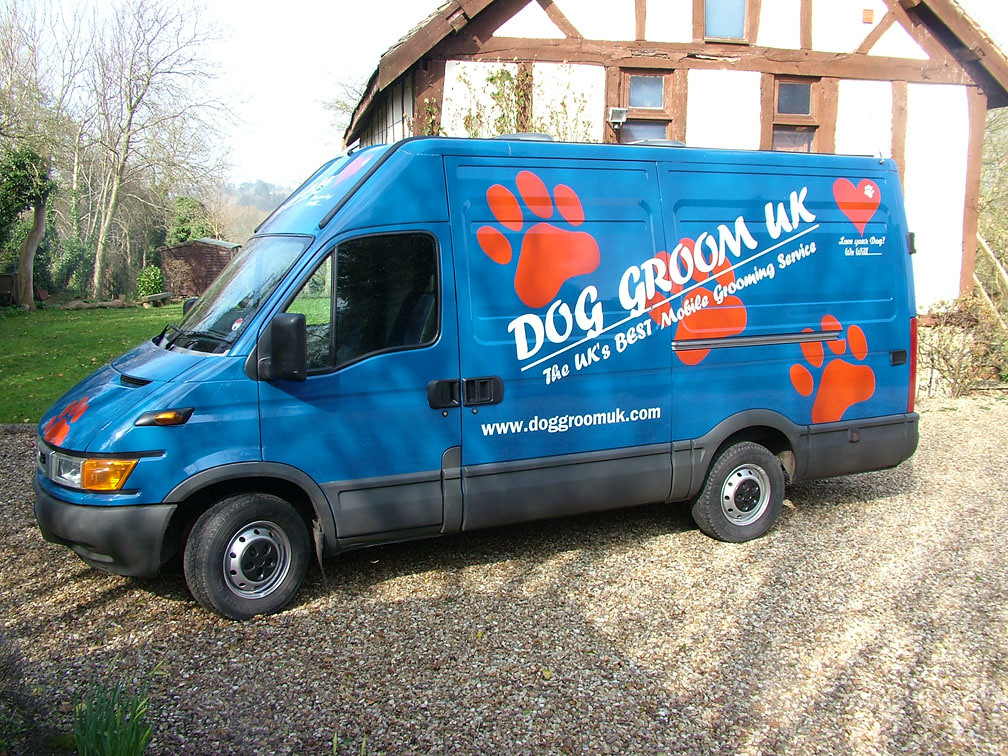
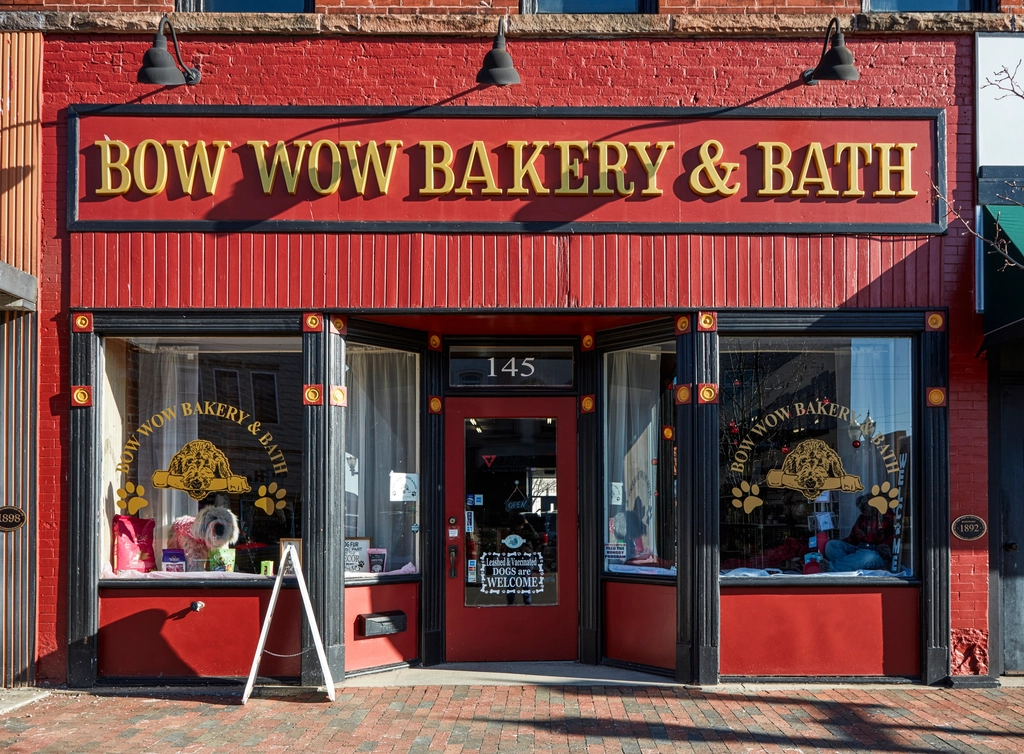
Not every dog does well in a busy shop. Mobile groomers work from a van parked in your driveway, which suits dogs that hate car rides or get stressed around other animals, and elderly owners who cannot drive. Expect to pay a premium of twenty to forty percent for the convenience. Cat grooming is a separate skill; many dog groomers will not take cats at all, and the ones that do should be asked how they restrain them. Some shops cover both, as this Farmington salon's name suggests:
The first visit sets the pattern for every visit after it, so make it easy. Take your dog for a long walk beforehand so it arrives tired rather than wound up. Do not feed a large meal right before; a nervous dog on a full stomach may vomit on the table. Bring vaccination records, since most salons require proof of rabies vaccination and many ask for distemper and Bordetella as well. Tell the groomer about any sore spots, lumps or places your dog does not like being touched, and about the commands it knows. "Sit" and "stay" make nail trims much easier.
If your dog has never been groomed, ask for a short introductory visit: a bath, a nail trim and a few minutes on the table with the clippers running but not touching. Many groomers offer this at a reduced price for puppies, and it pays off for years.
Warning signs after the visit
Some redness is normal after a close clip, especially around the belly and paws, and should fade within a day. Anything more than that is worth a call: raw patches, cuts you were not told about, a dog that is limping, shaking its head repeatedly (a sign of water or irritation in the ears) or refusing to eat. A good groomer will want to know. If the shop shrugs it off, find another one.
Also watch your dog's behavior at the next drop-off. A dog that walks in willingly, or at least calmly, is telling you the groomer treated it well. A dog that plants its feet at the door is telling you something too.
How the listings on this site can help
Every grooming listing on Local USA shows the address, phone number, hours and the latest Google rating and reviews, pulled from the business's public profile, plus photos where Google has them. Use the category page for your city to see who is nearby, then call two or three and ask the questions above. The listings in the Northeast tell the same story as the ones in the Southwest: small salons, long-standing customers and owners who answer the phone themselves. This one in Troy, New Hampshire, is a good example:
Decide what your dog needs. Call two or three salons and ask about time, dryers, handling, matting and insurance. Visit before you book, and trust your nose. Read reviews for specifics, not stars. Get the full price up front and tip the groomer who handles your difficult dog with patience. And if anything about the first visit feels wrong, you are allowed to leave: the right groomer will keep your dog for a decade, and it is worth taking a week to find them.
How downtown LA is laid out district by district, what hotels really cost with fees and parking, where the coffee, ramen, tacos, pizza, ice cream and bars cluster, and how to get around without a car.
Every dog owner eventually faces the same question: what do we do with the dog when we travel, or when work runs twelve hours a day? Boarding kennels, pet…
petsdog boardingcosts
Welcome to Local USALet me help you find a great place today!